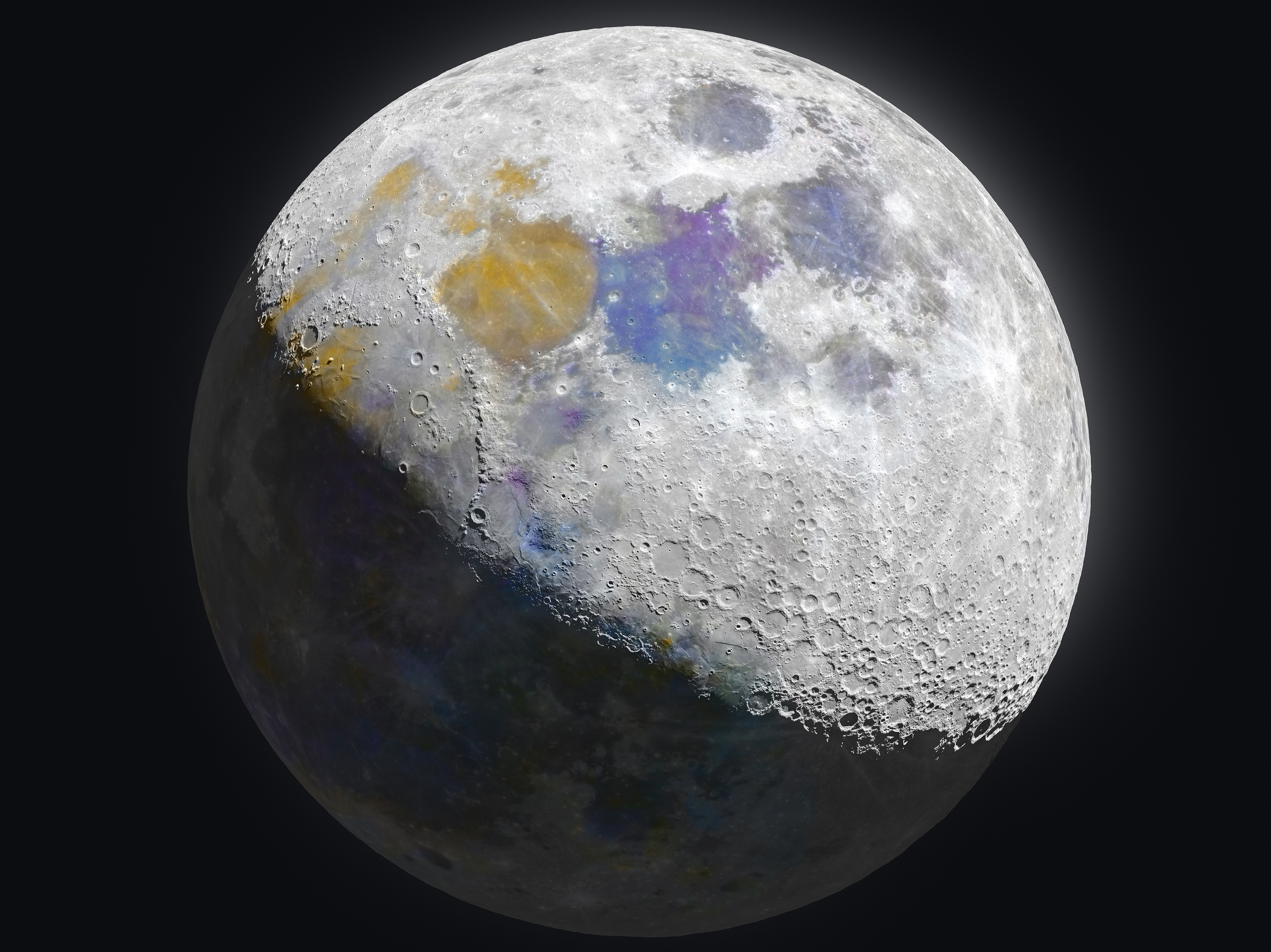
Behind the image
The Equipment
A Celestron Nexstar 8SE telescope provides the focal length needed for high-resolution lunar detail, paired with a Player One Uranus-C astronomy camera for the monochrome panel captures and a Nikon D750 DSLR for the mineral colour photography.
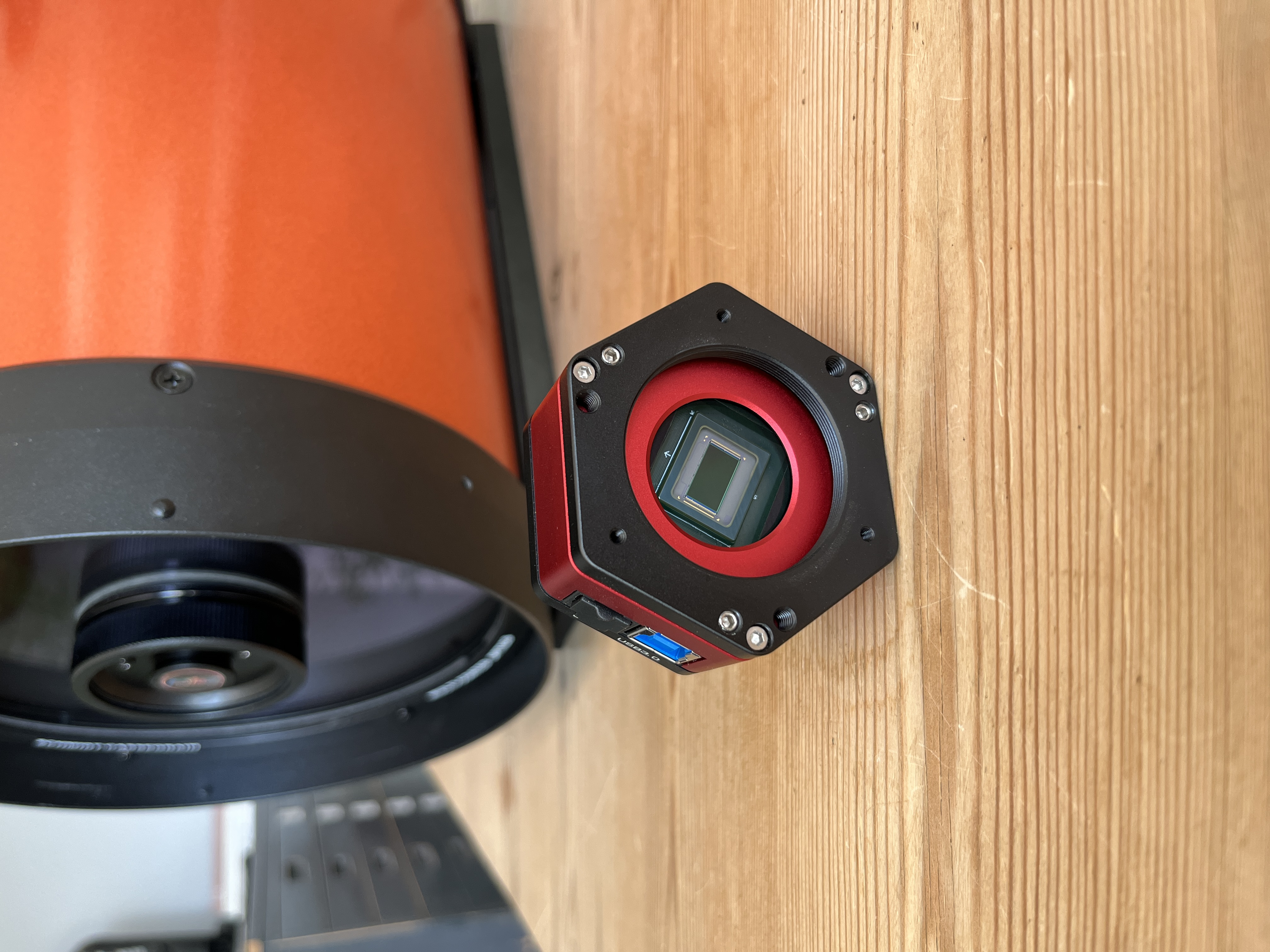 Astronomy camera
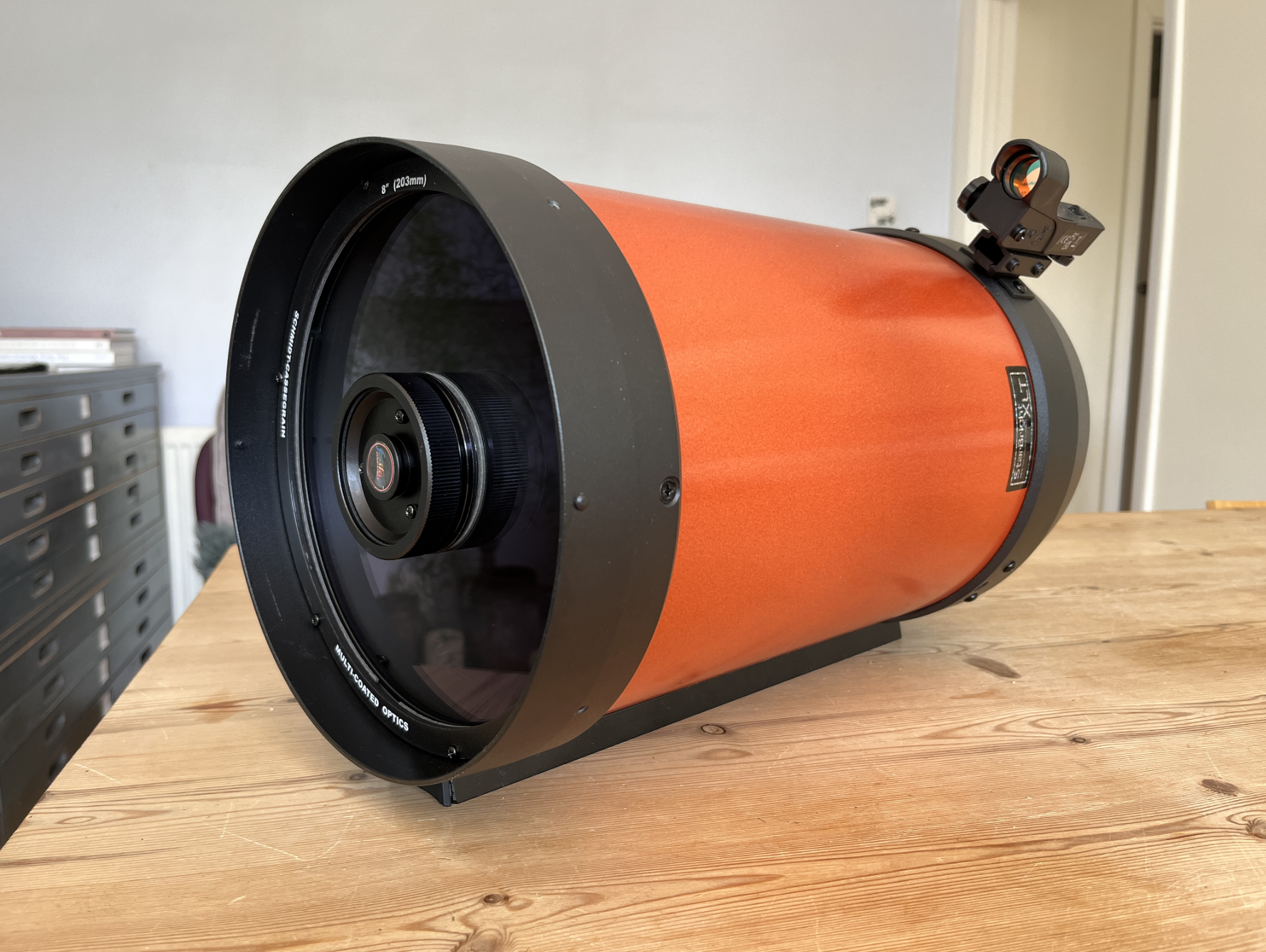 Telescope
Capturing the Panels
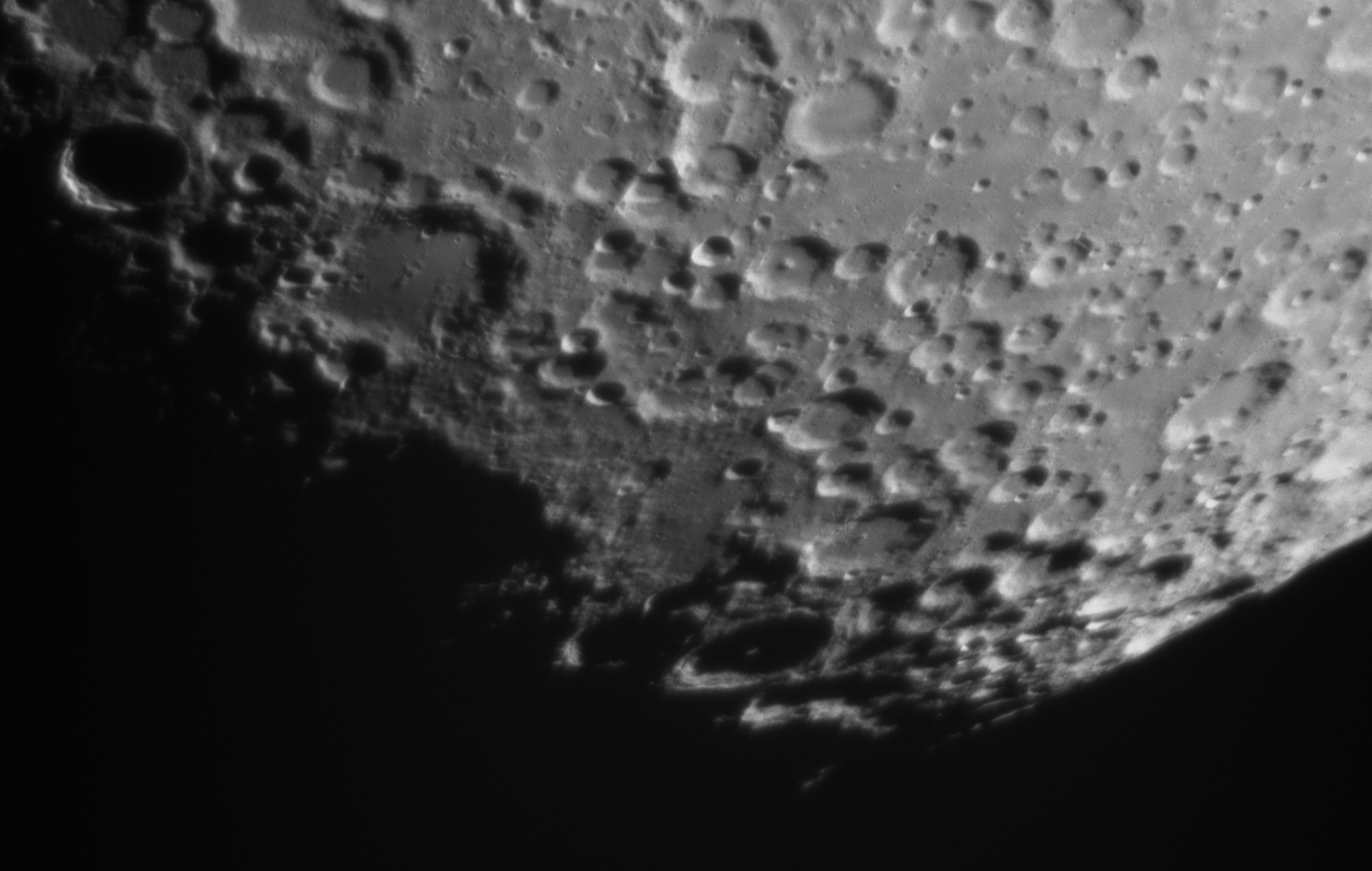
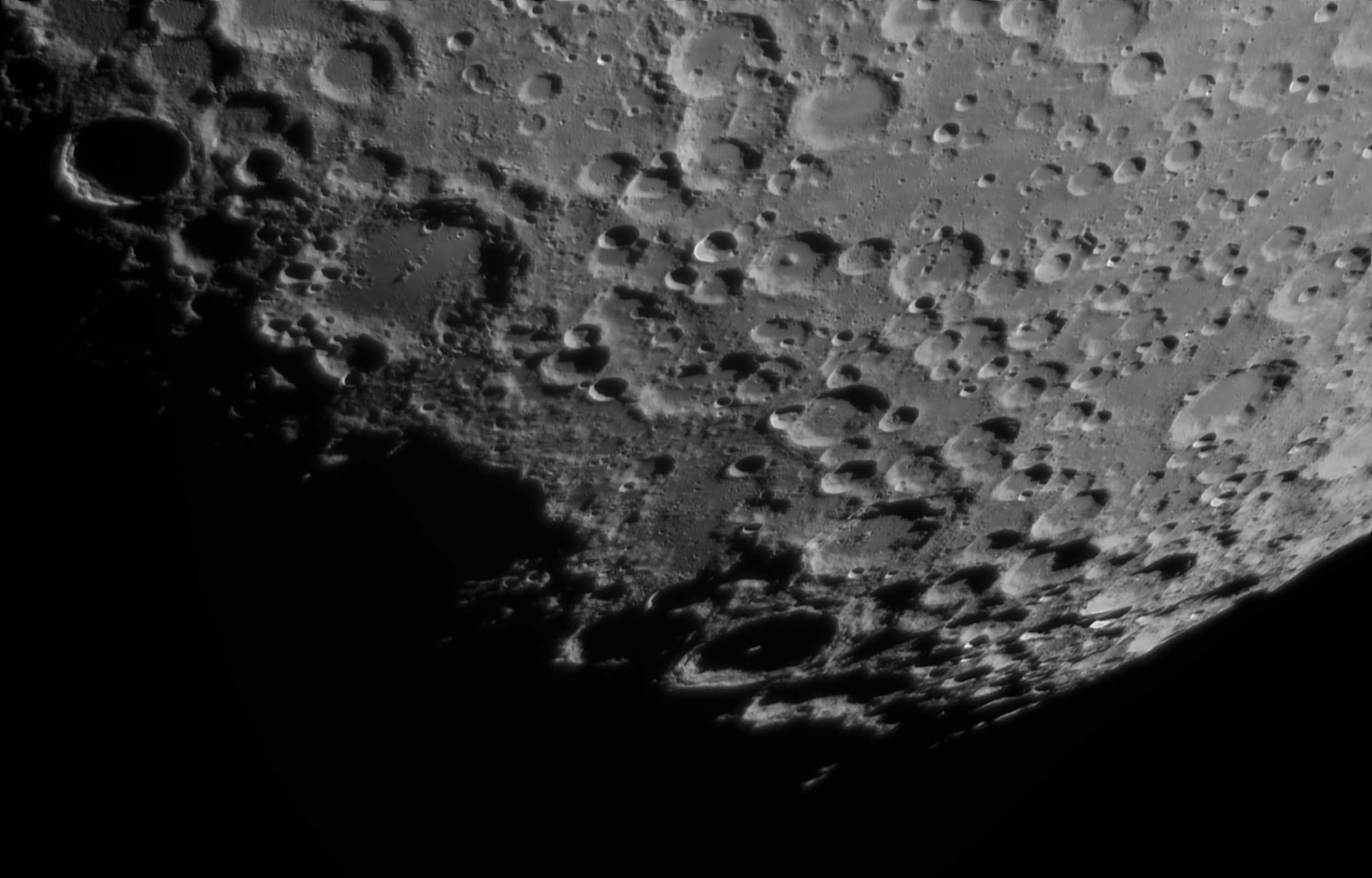
The Moon is divided into sections and each is recorded as high-resolution monochrome video through the telescope. The mount tracks the Moon across the sky while thousands of frames are recorded per panel. The telescope is panned across the entire surface until every section has been captured.
Stacking & Sharpening
Try it yourself — Sharpening Studio ↗︎A single raw frame from the video is hazy and low in contrast. Around 2,000 of the best frames from each panel are aligned and stacked together, then sharpened — eliminating atmospheric distortion and revealing fine surface detail, crater walls, and highland terrain that would otherwise be invisible.
Assembling the Mosaic
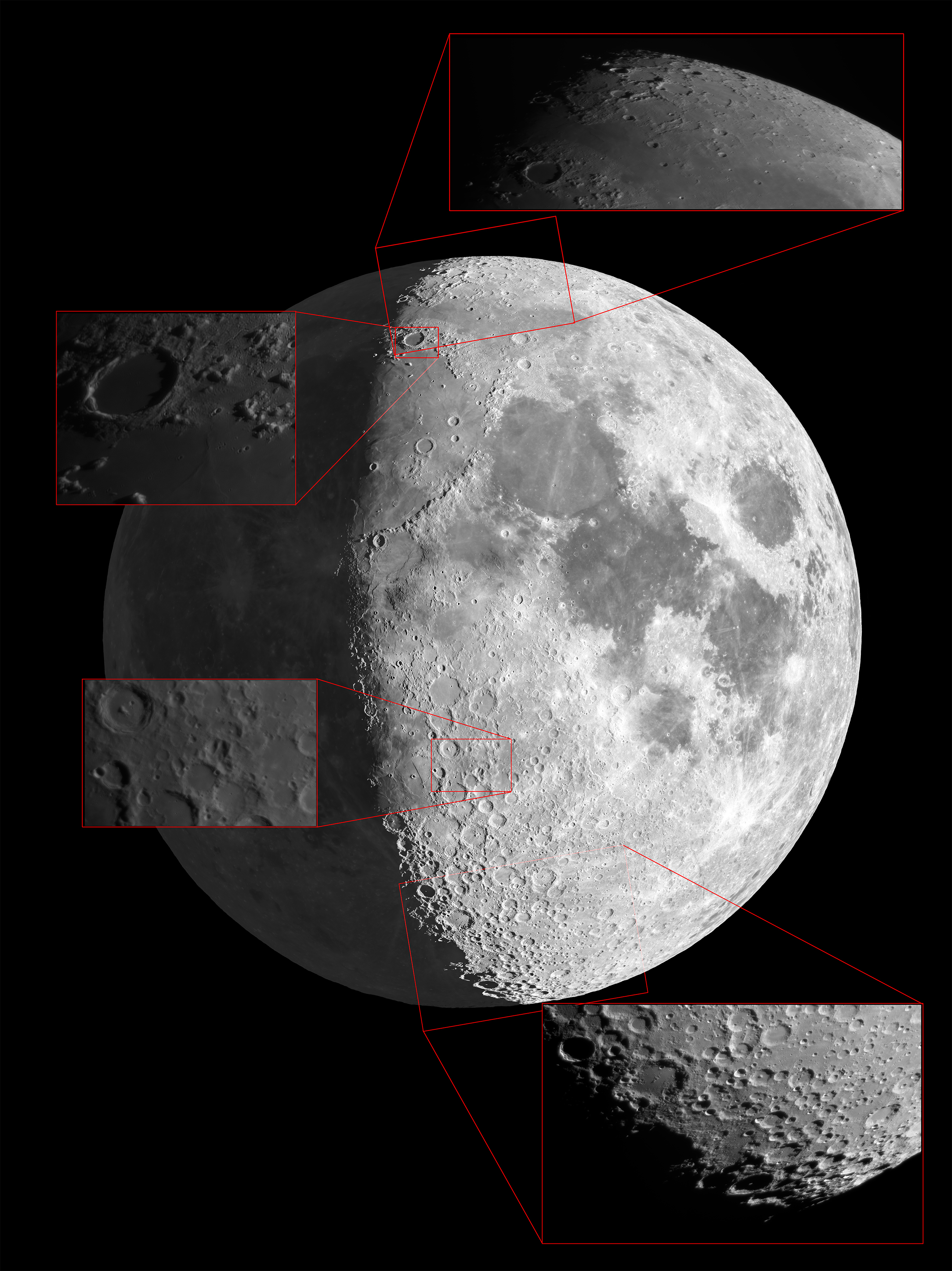
After every panel is processed, each one is carefully aligned and manually stitched together to form the complete full-disk image. This mosaic approach allows for far greater magnification during capture than shooting the entire Moon in a single frame — producing both the resolution and the detail needed for the deep-zoom viewer.
Revealing the Colours
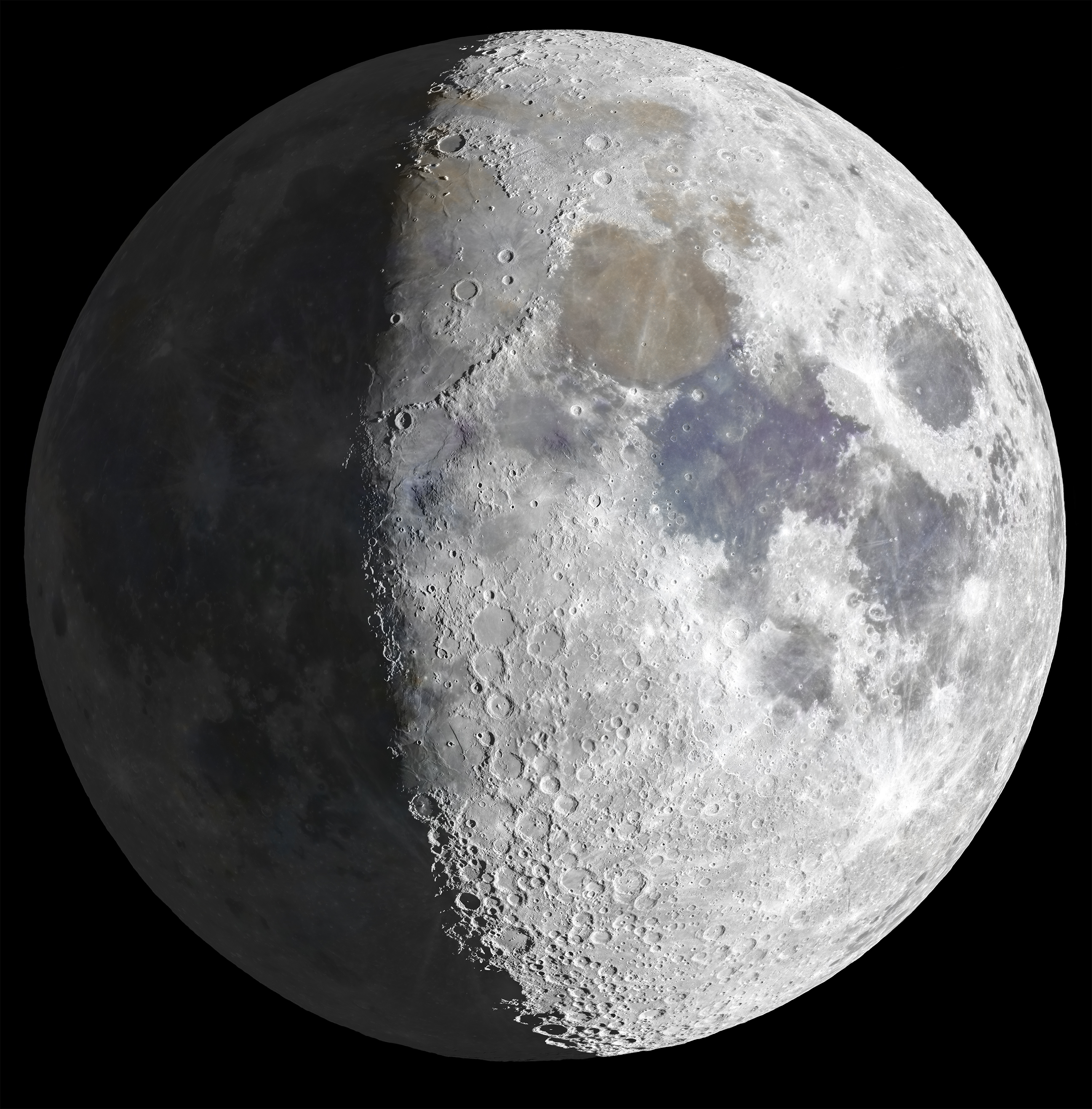
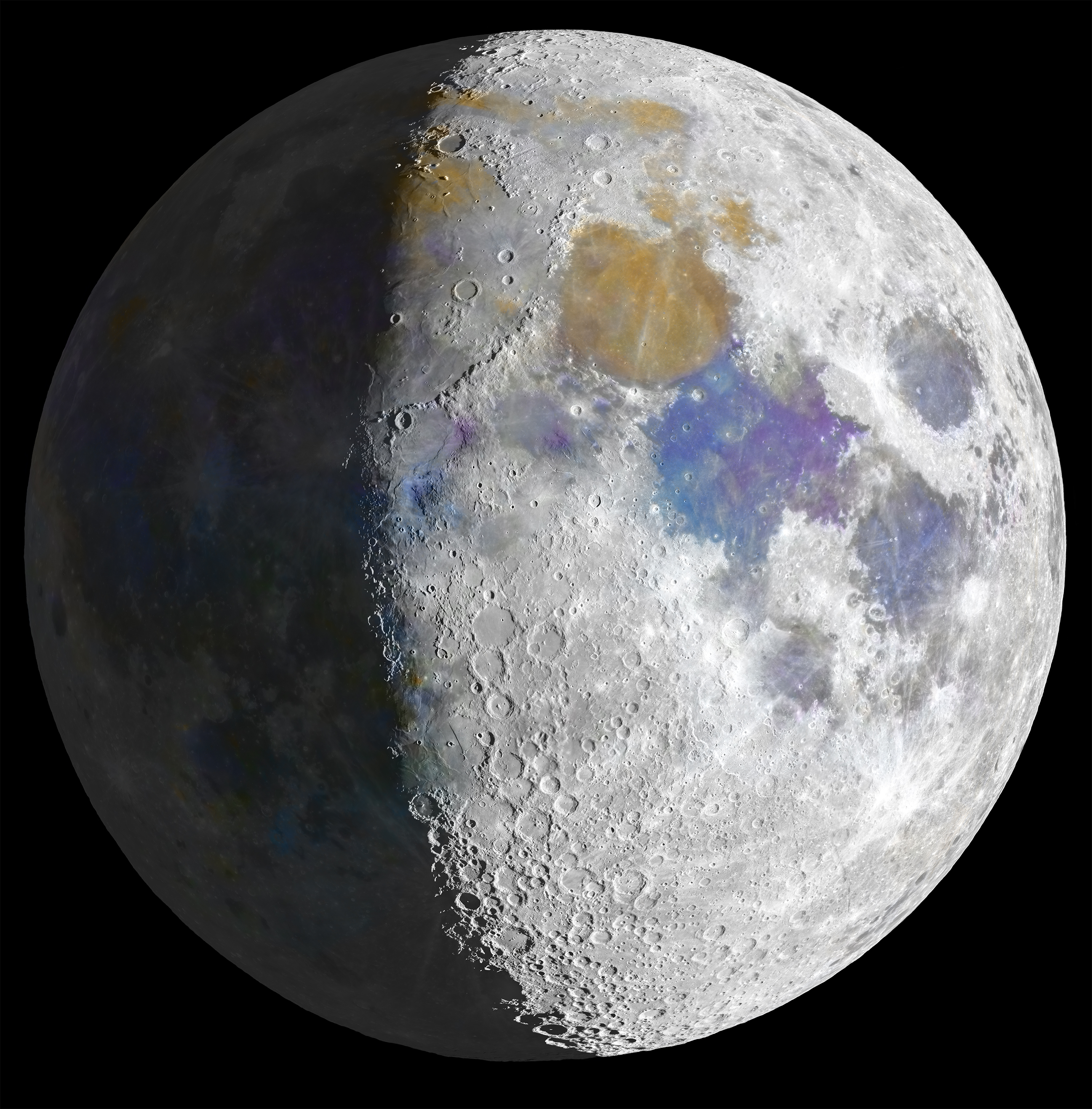
Try it yourself — Mineral Studio ↗︎Multiple colour photographs of the Moon are stacked together using a DSLR camera. With each addition, subtle colours intensify and emerge. These are the Moon's real colours — titanium-rich mare basalts appear in cool blues and purples, while iron-oxide-rich highland material glows in warm orange and gold tones.
 Single photograph
 Stacked colours
Composite
All elements are combined into the final image — the detailed monochrome mosaic, mineral colour layer, and glow composited together into Moon in Bloom.